Watch History.
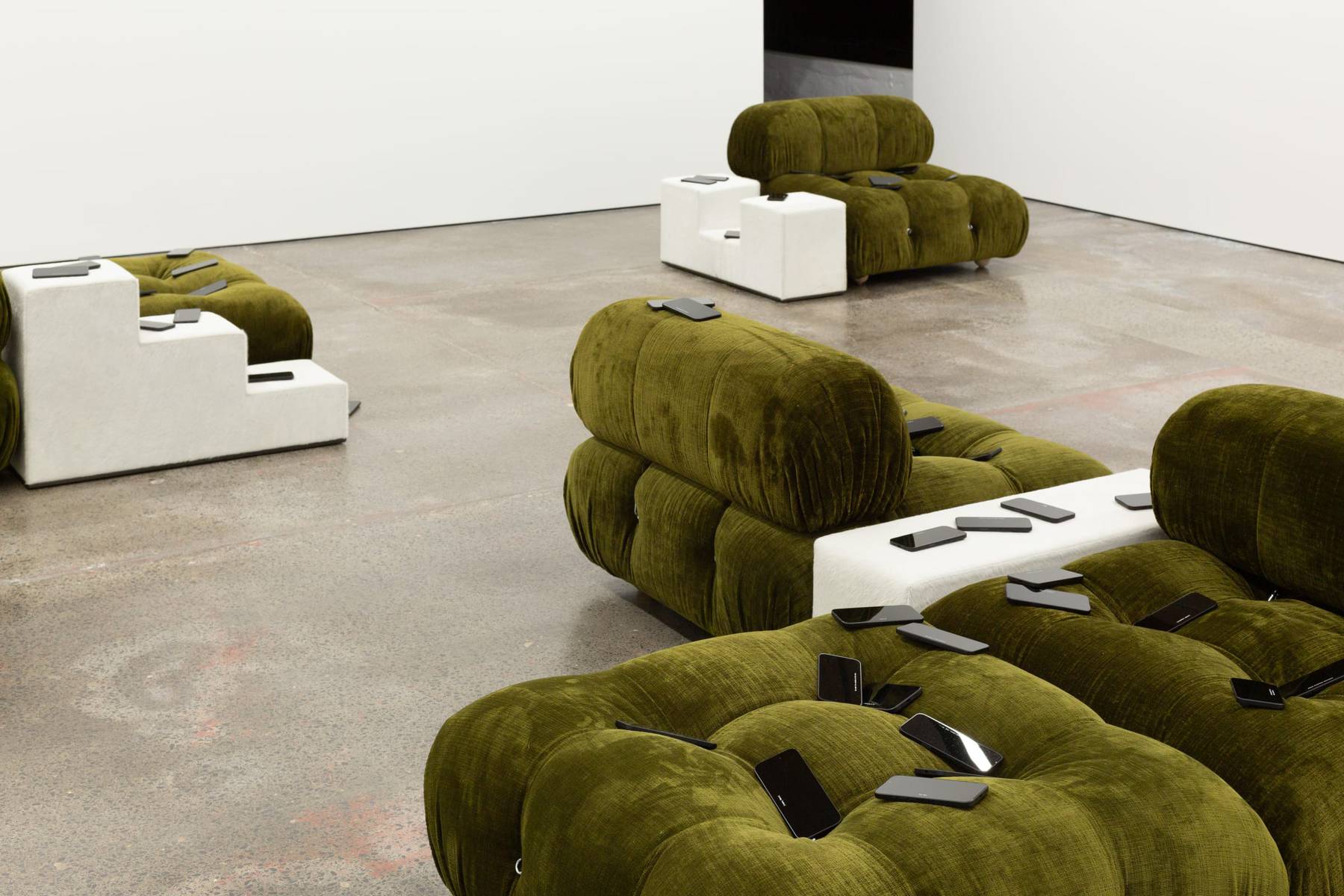
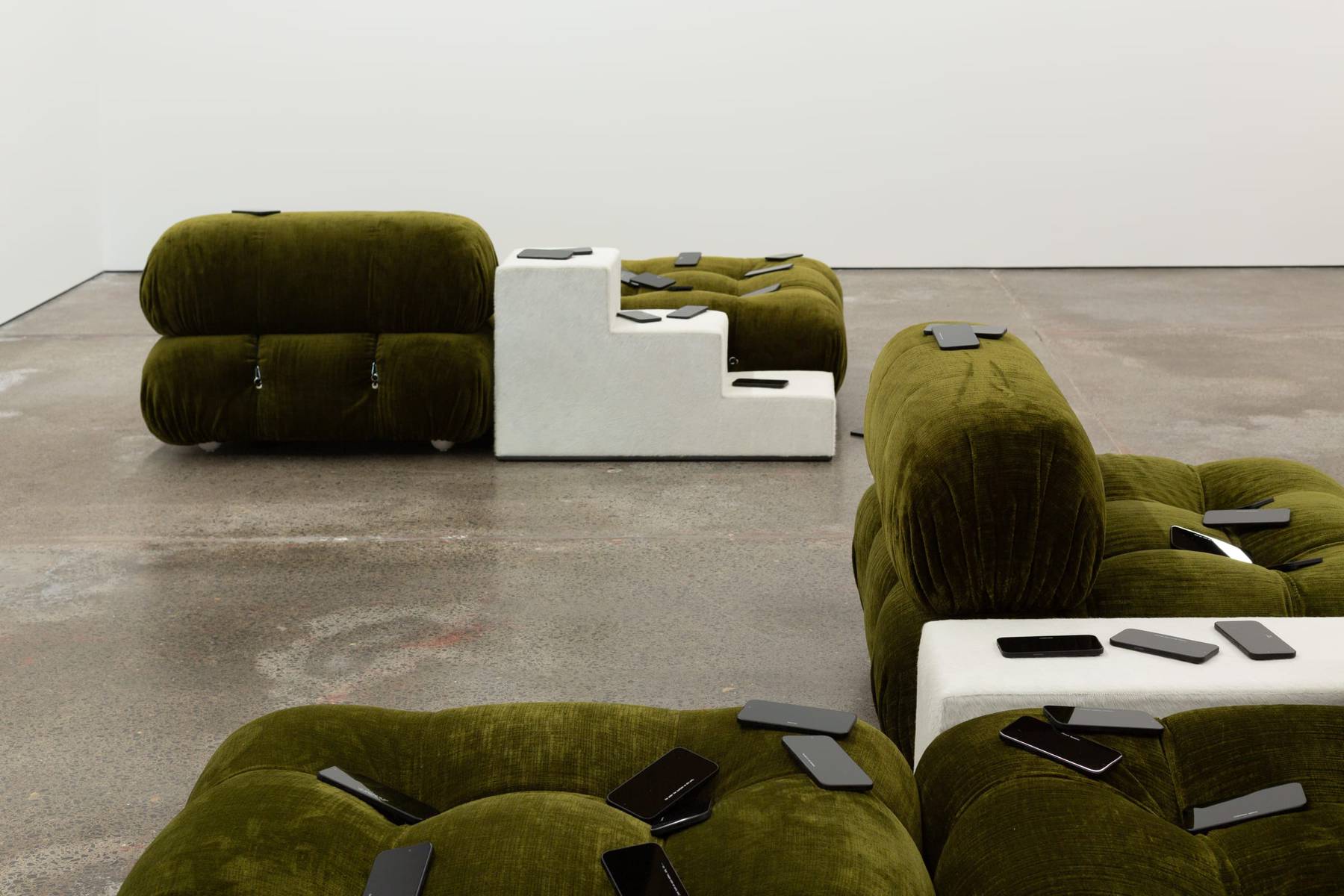
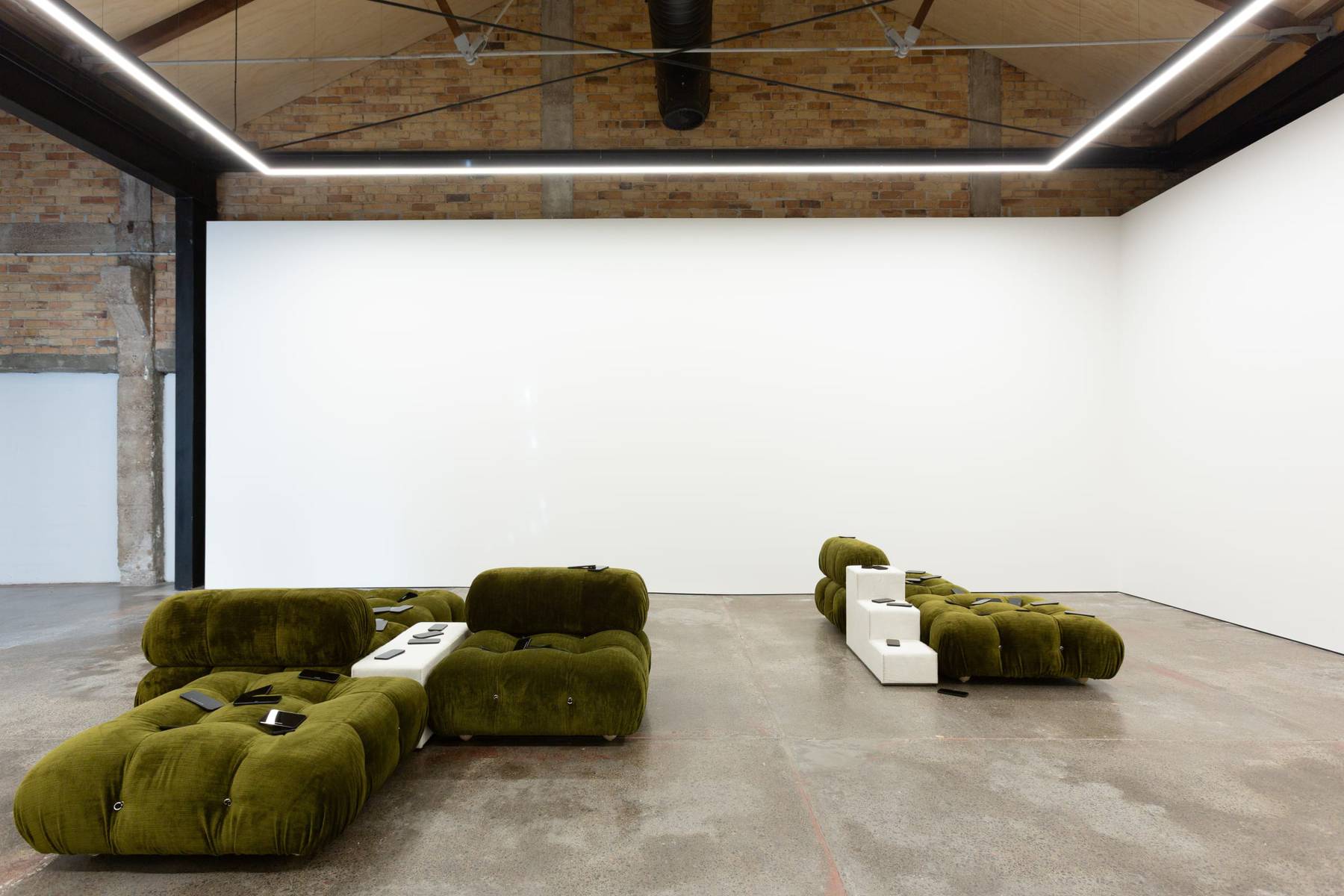
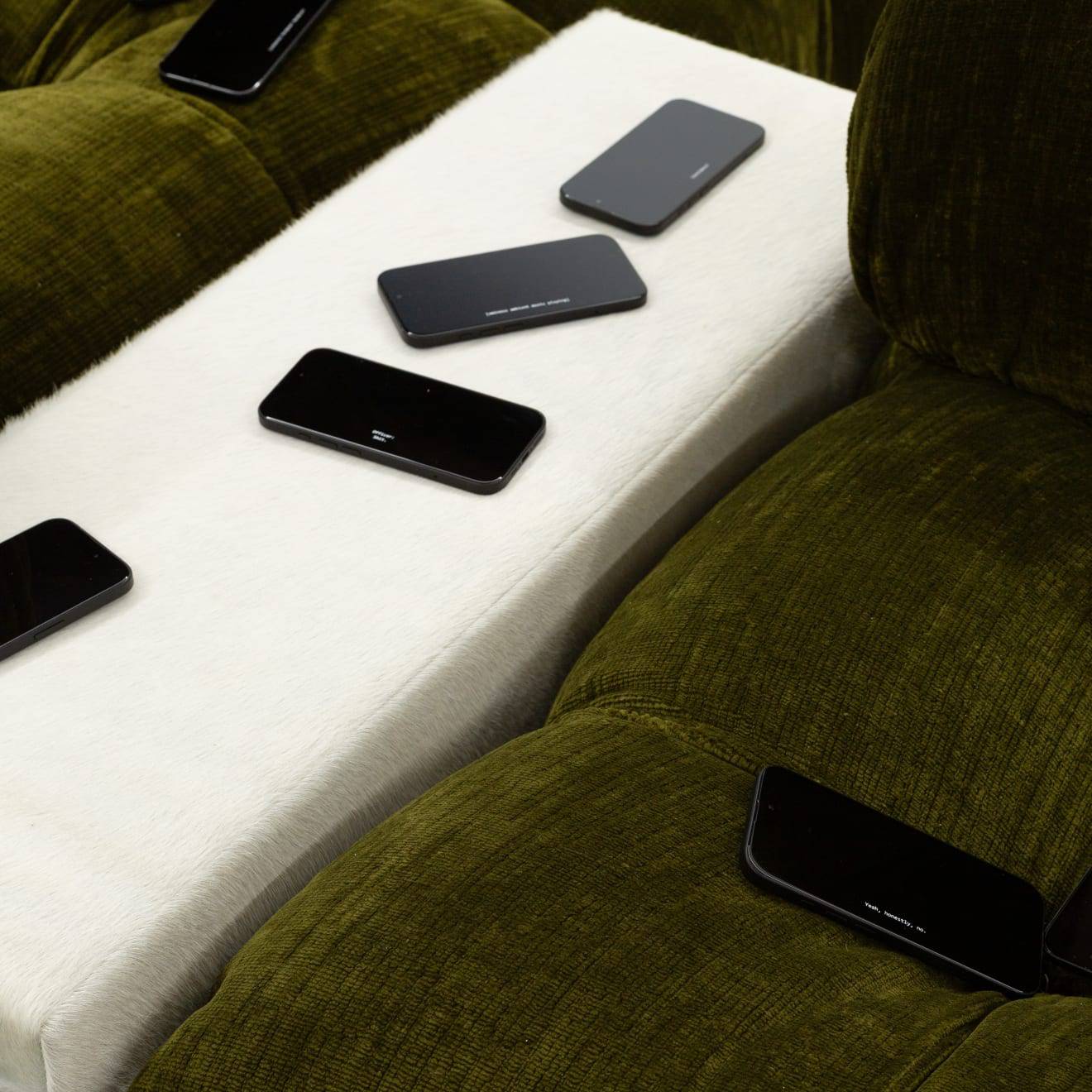
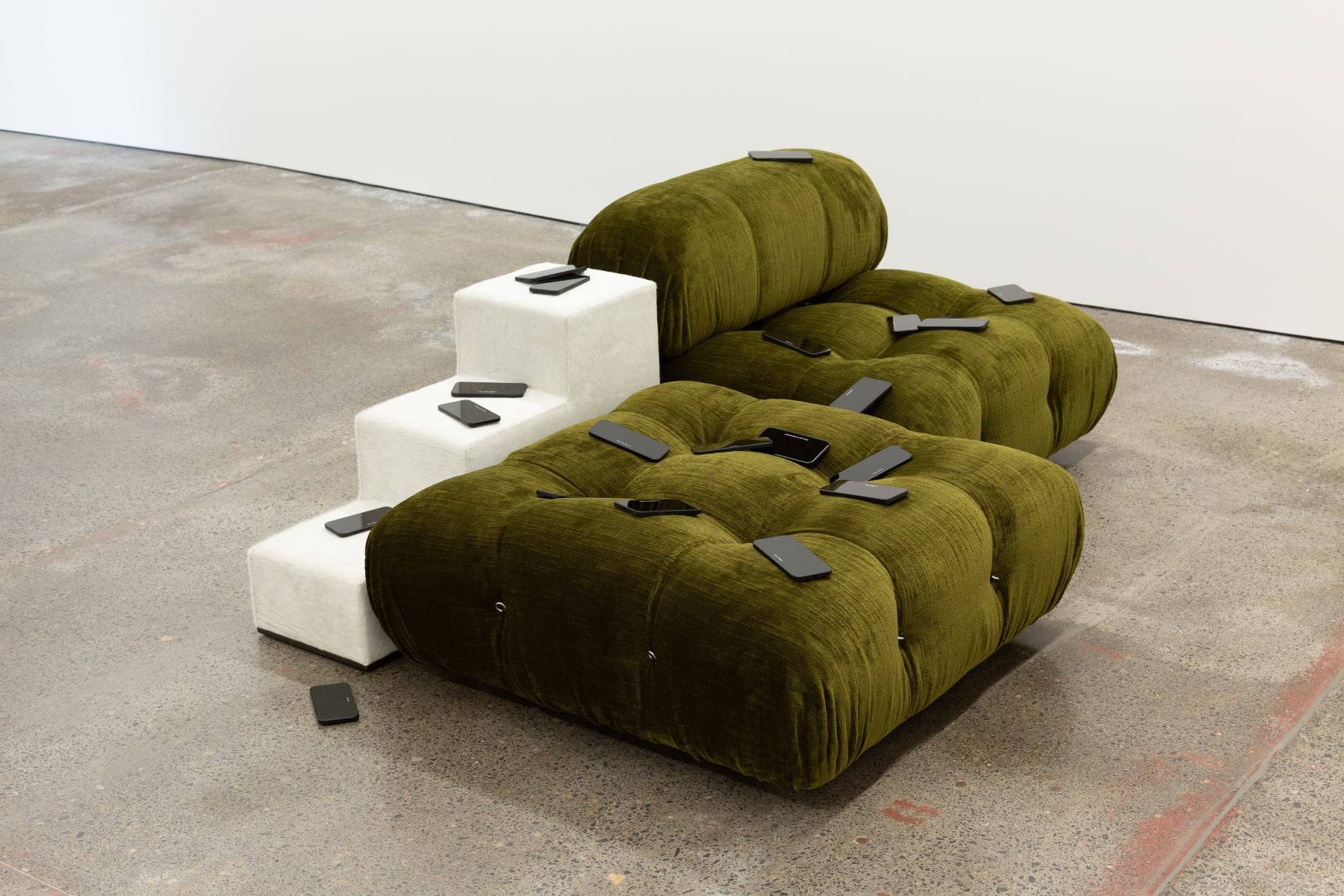
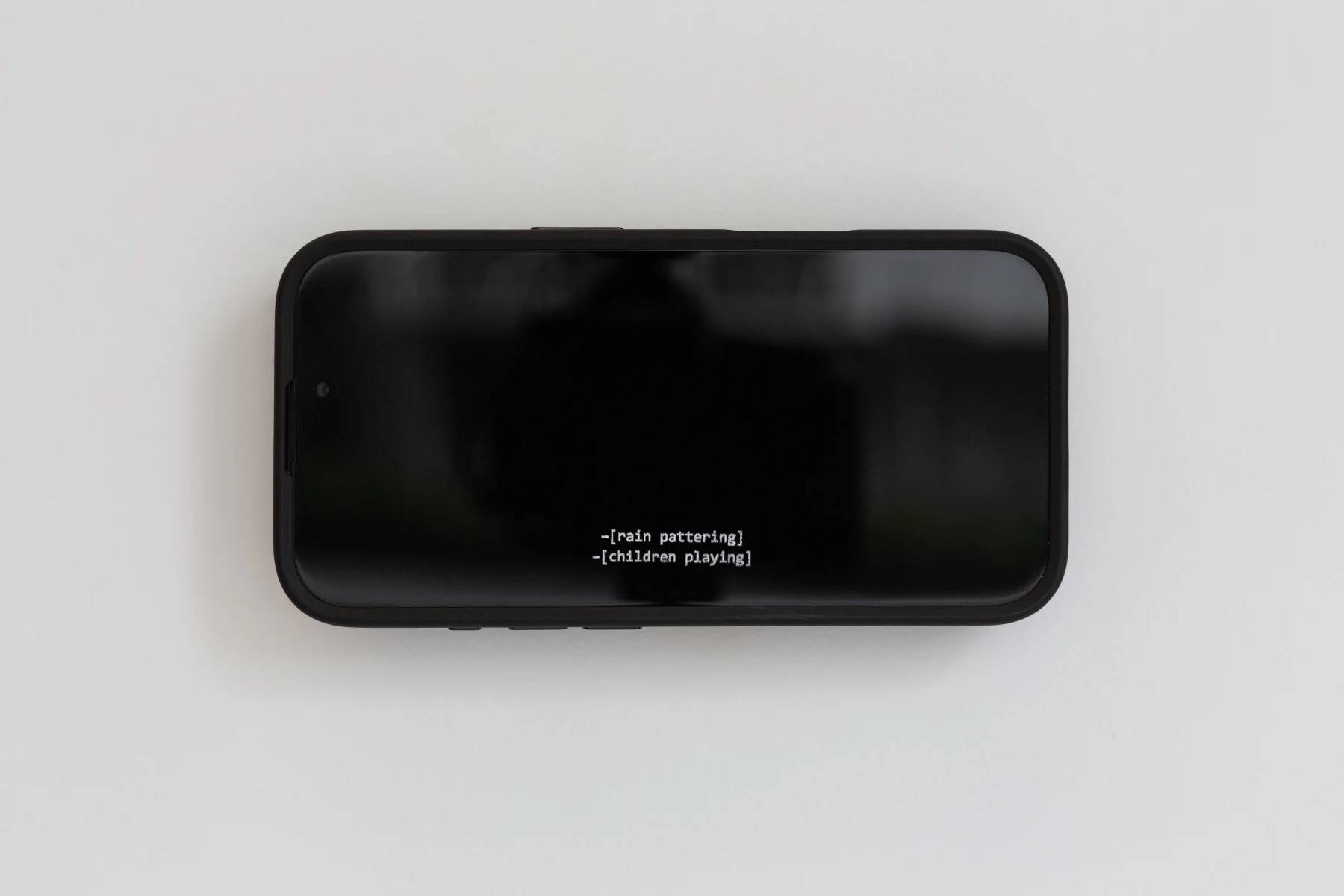
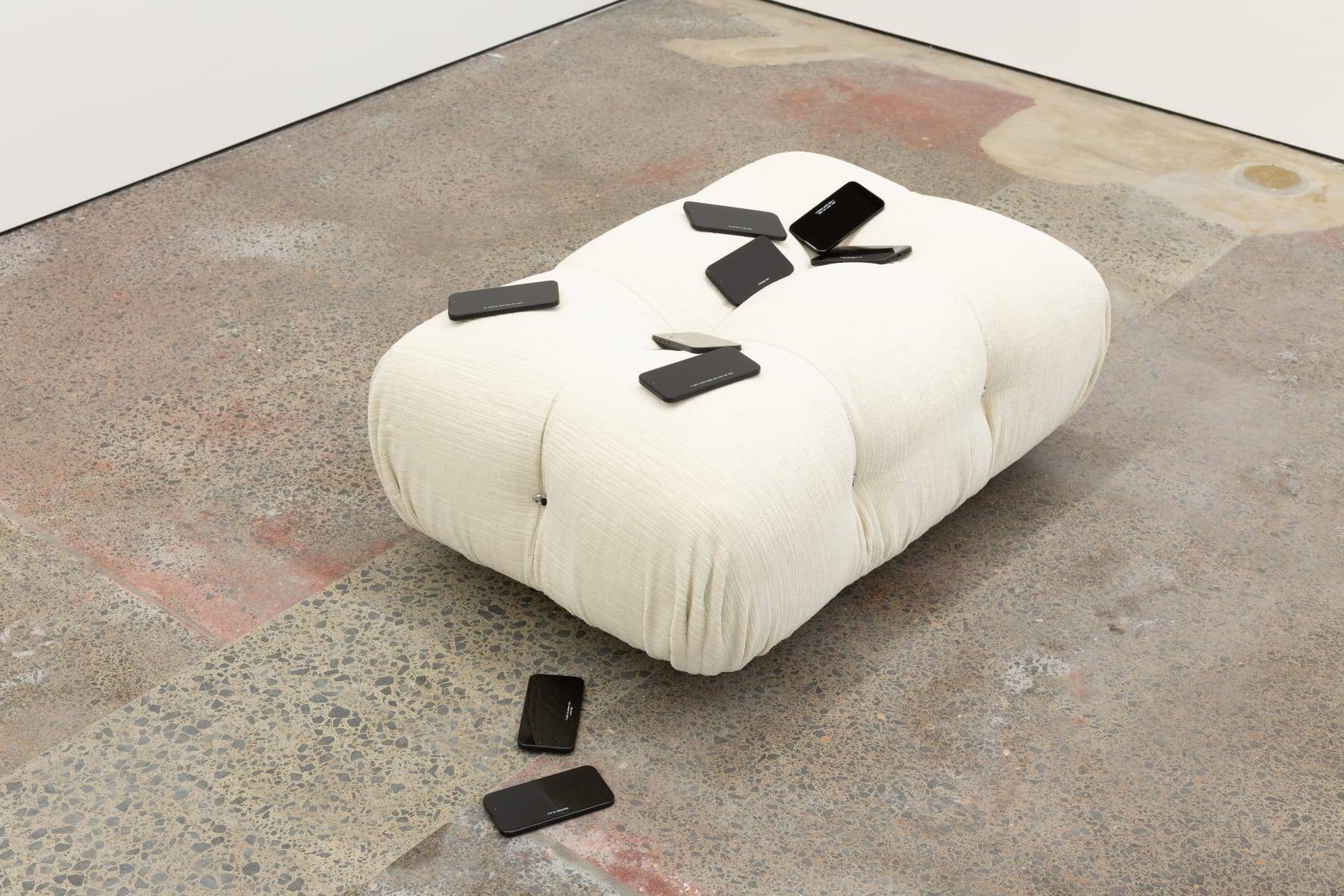
Watch History comprises some seventy iPhone 16 handsets arranged across a large modular sofa—Mario Bellini’s Camaleonda (1970) for B&B Italia. Like the furniture upon which they rest, each handset is showroom new.
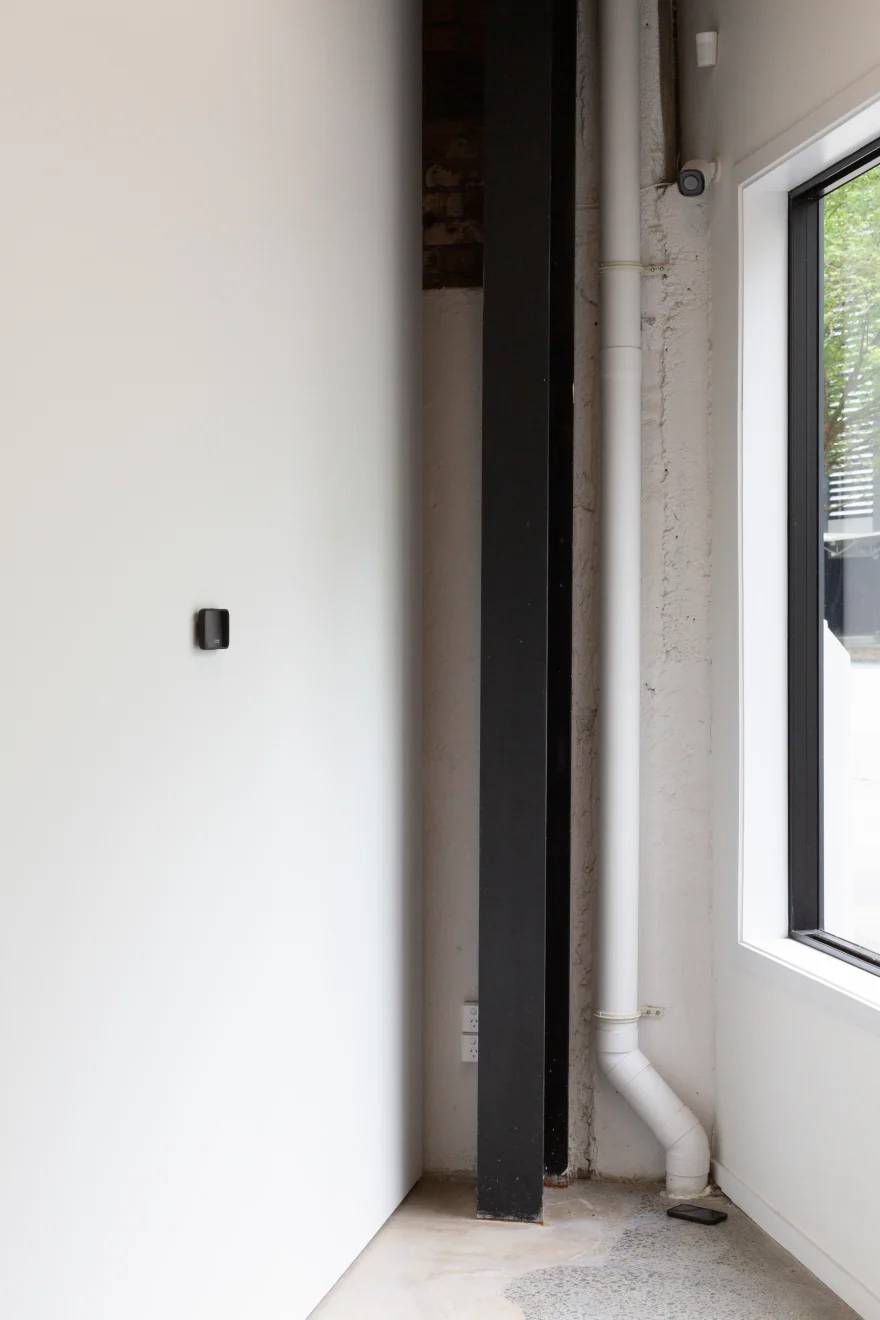
The various components of Bellini’s furniture system occupy the main area of the gallery floor, obliging visitors to move amongst them. Their lozenge-like upholstered forms echo Jony Ive’s Apple design language—equally iconic, though far more ubiquitous. While the furniture is arranged neatly, the phones are scattered seemingly at random, as if dropped in haste, abandoned, forgotten.
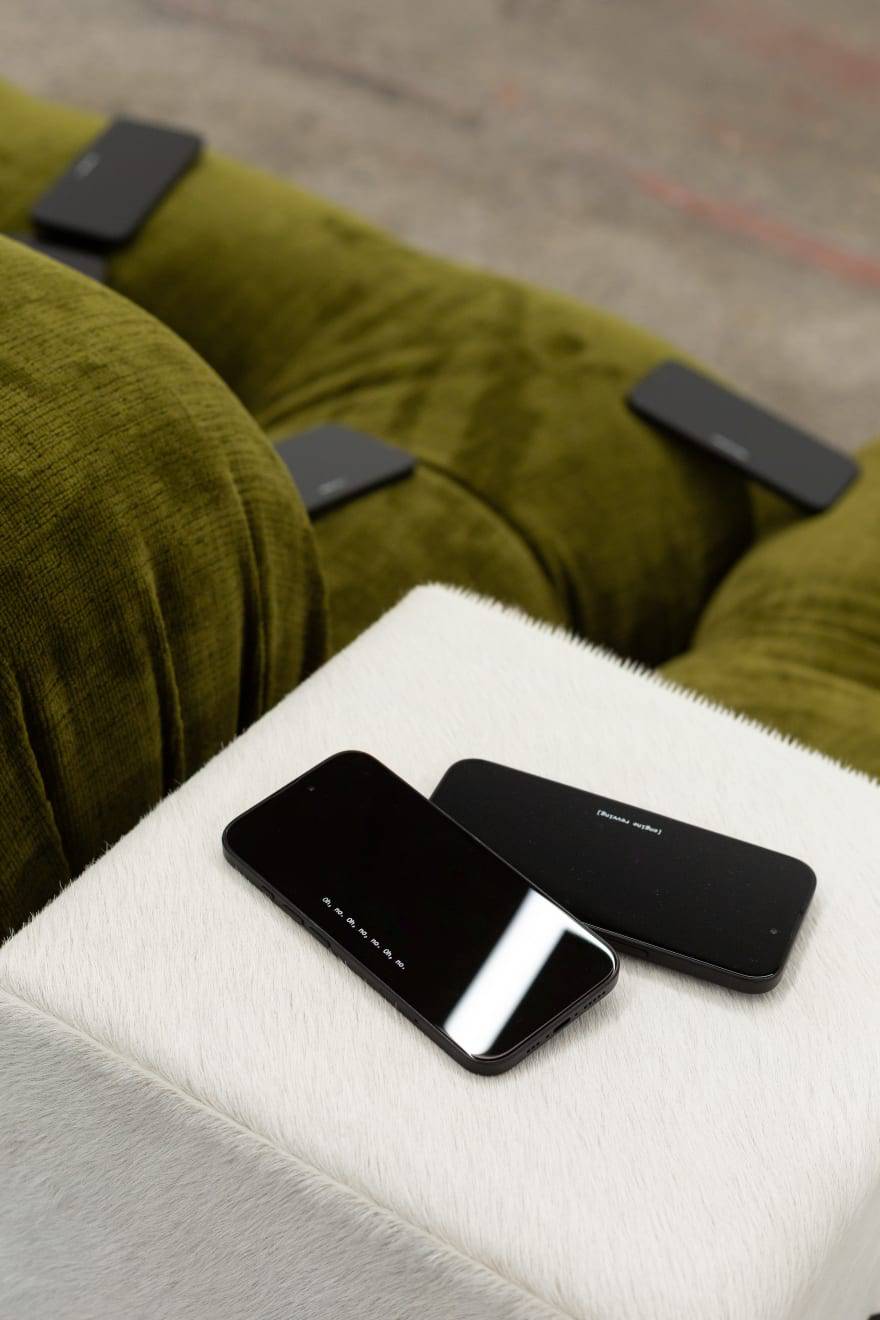
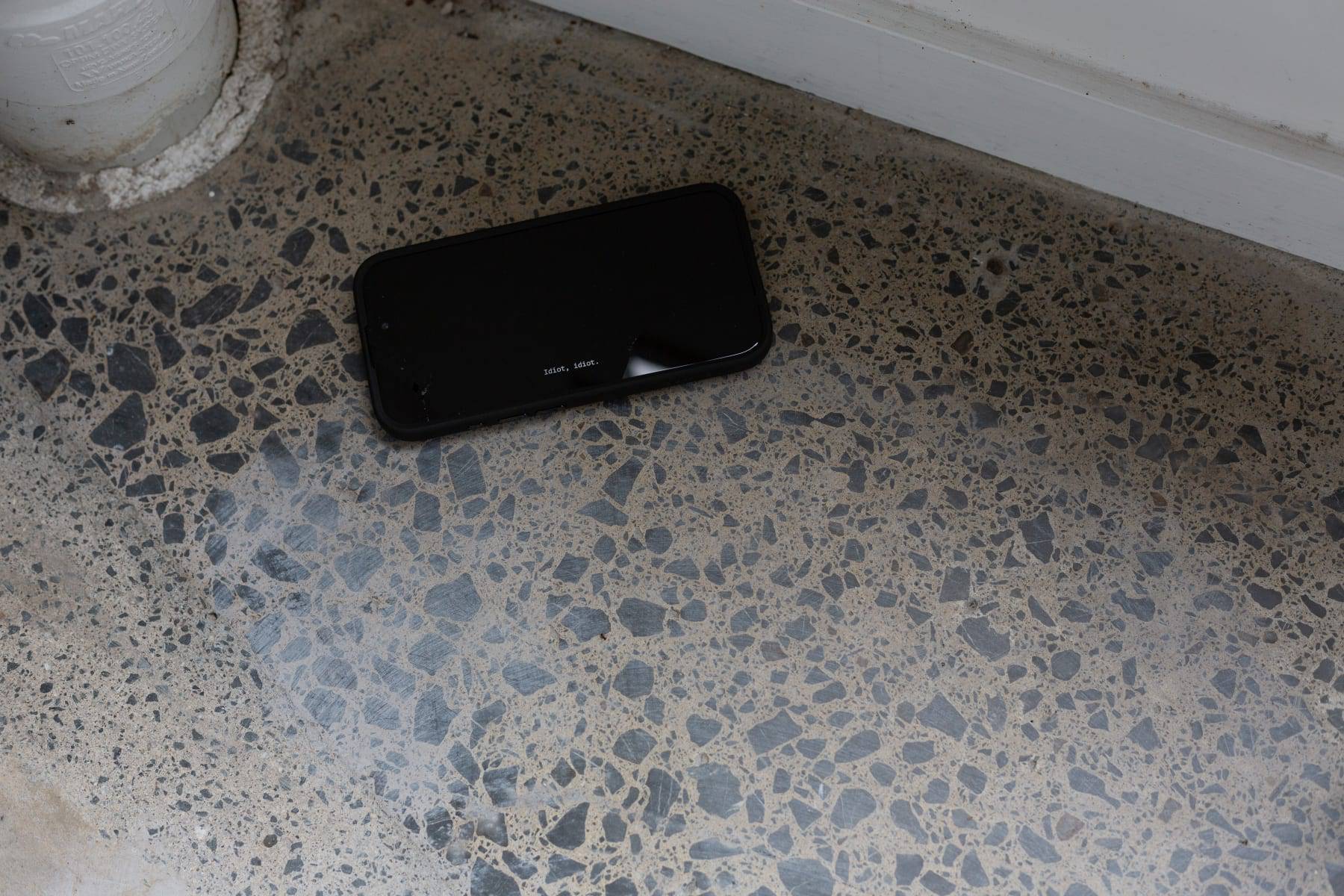
Each phone displays a short engraved line of text: closed captions lifted from television and film. Some are dialogue; others, bracketed audio descriptions. The screens are otherwise blank, black and mirror-like. This effect results from the anti-piracy controls built into Netflix’s iOS app, which allow only captions to appear when screenshots are taken. The fragments’ original sources have been deliberately left unidentified; even the artist admits he has forgotten many. While he notes they are drawn from a diverse range of genres—drama, comedy, action, documentary, reality TV—reflecting the everyday viewing habits of his family, their specific provenance is largely beside the point.
Stripped of their original contexts, the captions accumulate into a loose, Dada-like script that veers between the banal, comic and poetic. Pathos and bathos intertwine. This incongruous chorus emerges from objects typically designed for a single user—the personal device, bonded to one hand, one gaze. Here, their massed presence—dark, inert, numbering in the dozens—suggests excess, obsolescence and alienation.
Watch History
Sumer Fine Art
Auckland,
13 October – 22 November
(solo)