Infrastructure: power, politics and imagination .
The Power that Flows Through Us
in Infrastructure: power, politics and imagination
View films from this body of work here
Pātaka Toi Adam Art Gallery.
20 April – 30 June 2024
Original exhibition text
Infrastructure brings together three discrete exhibitions tracing moments from the 1980s: Matthew Galloway examining the socio-political climate surrounding the Clyde Dam, a legacy of Robert Muldoon’s ‘Think Big’ initiative; Doris Lusk’s Imagined Projects series painted in 1983/4 depicting fictional industrial sites in the landscape; and Raúl Ortega Ayala’s documentation of the exclusion zone around Chernobyl—a landscape rendered uninhabitable by the nuclear power plant disaster of 1986—and the impact of this on its former residents.
These exhibitions all focus on power: both in the sense of the physical creation of energy and the political thrust behind large infrastructural projects. They consider the landscape and how environmental conditions are altered through these extractive processes. They think about the people, both the key political players who make decisions and those whose lives are irrevocably changed through their actions. Brought together in this way these exhibitions call attention to how we might imagine our futures by thinking about the recent past.
Matthew Galloway: The Power that Flows Through Us
Level 3 Window Gallery & Congreve Foyer
Level 2 The Landing
Level 1 Stairway Gallery & Lower Chartwell Gallery
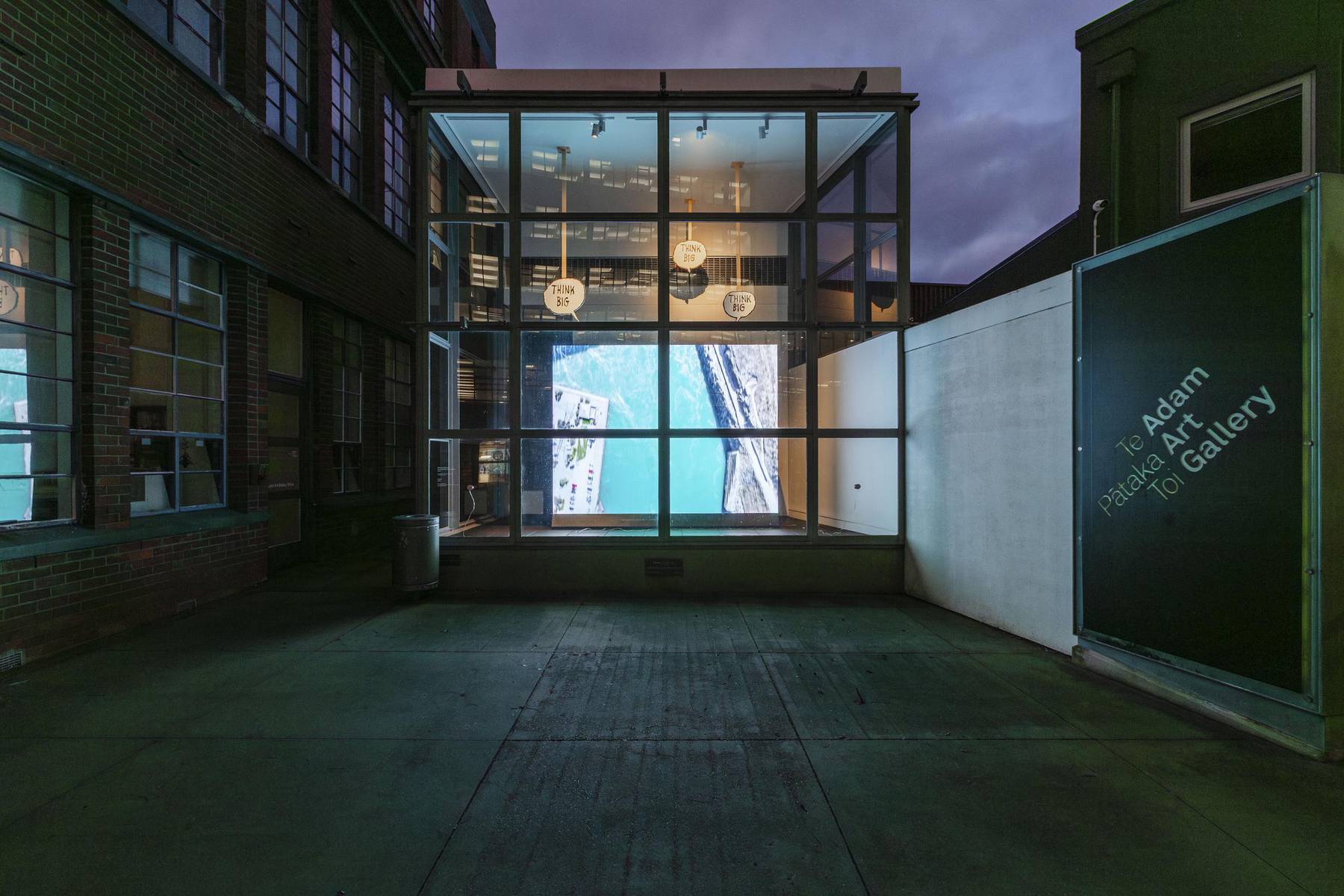
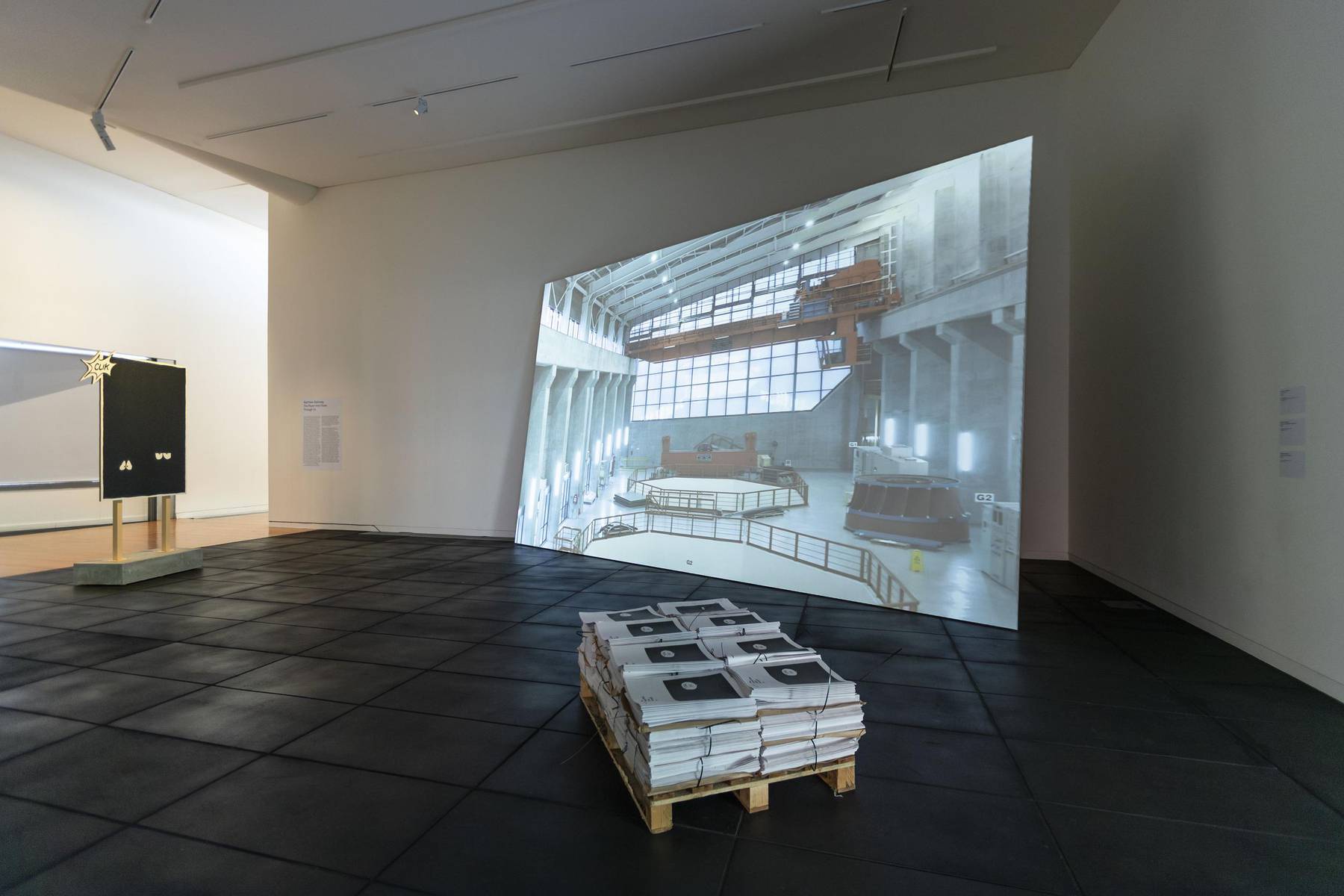
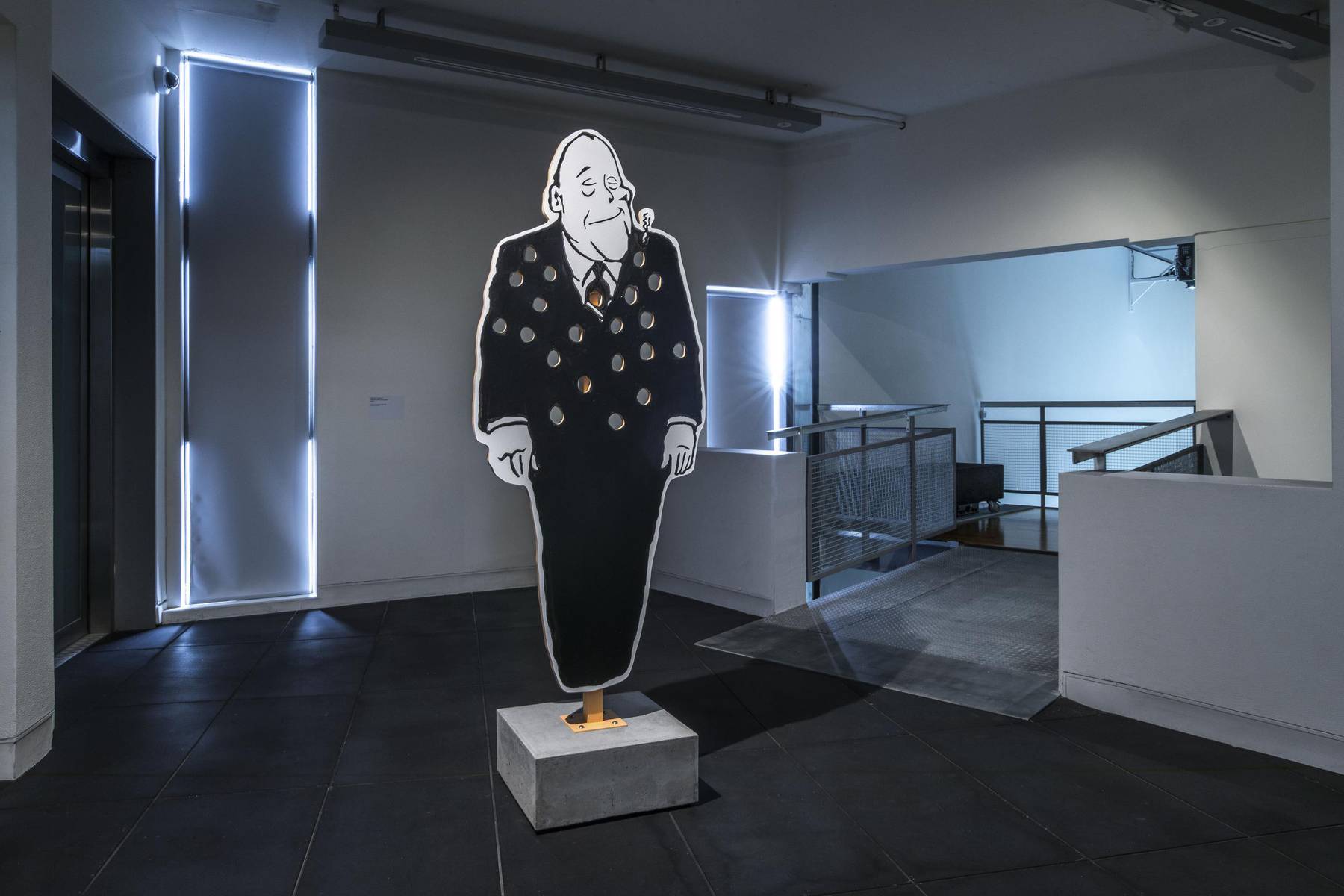
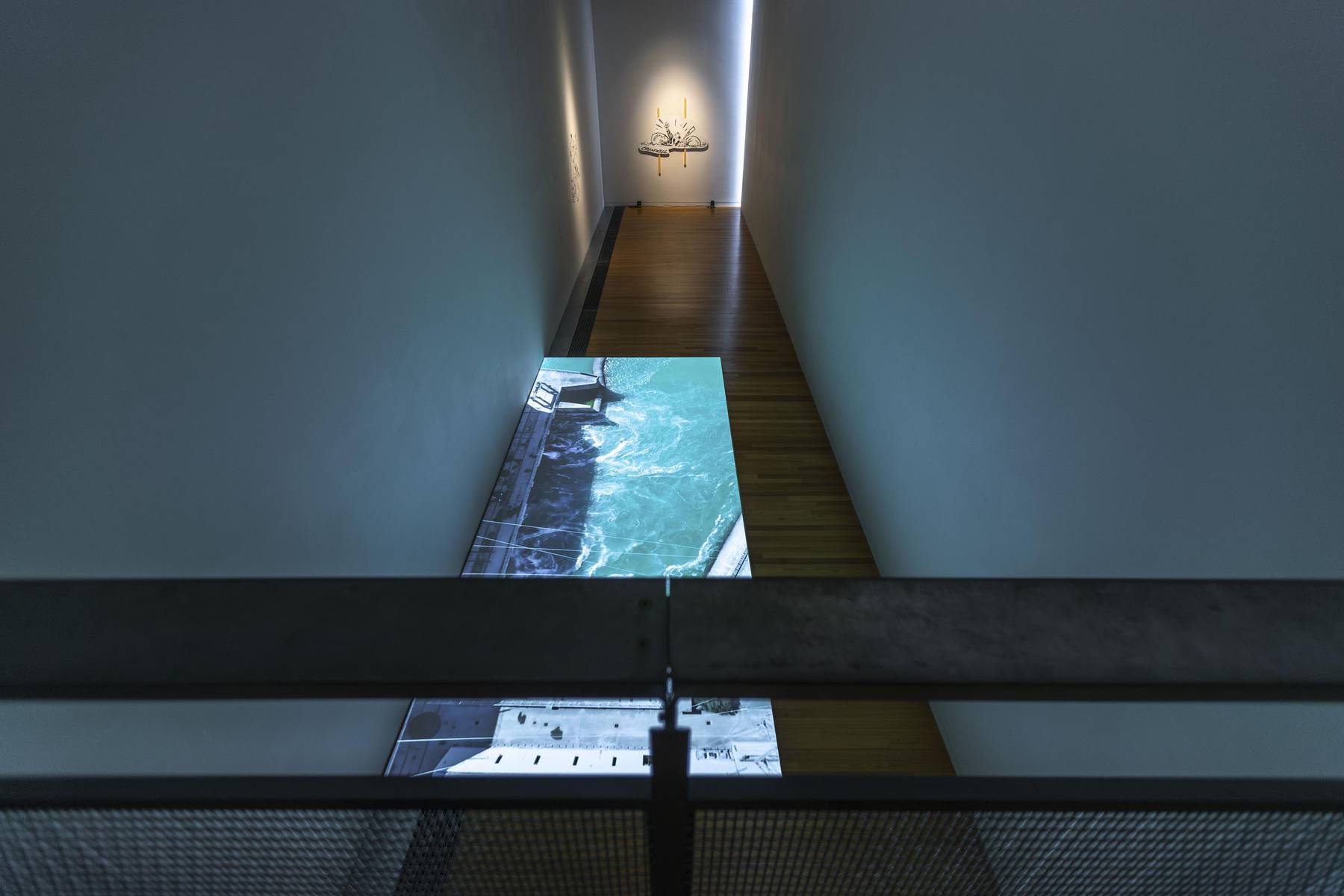
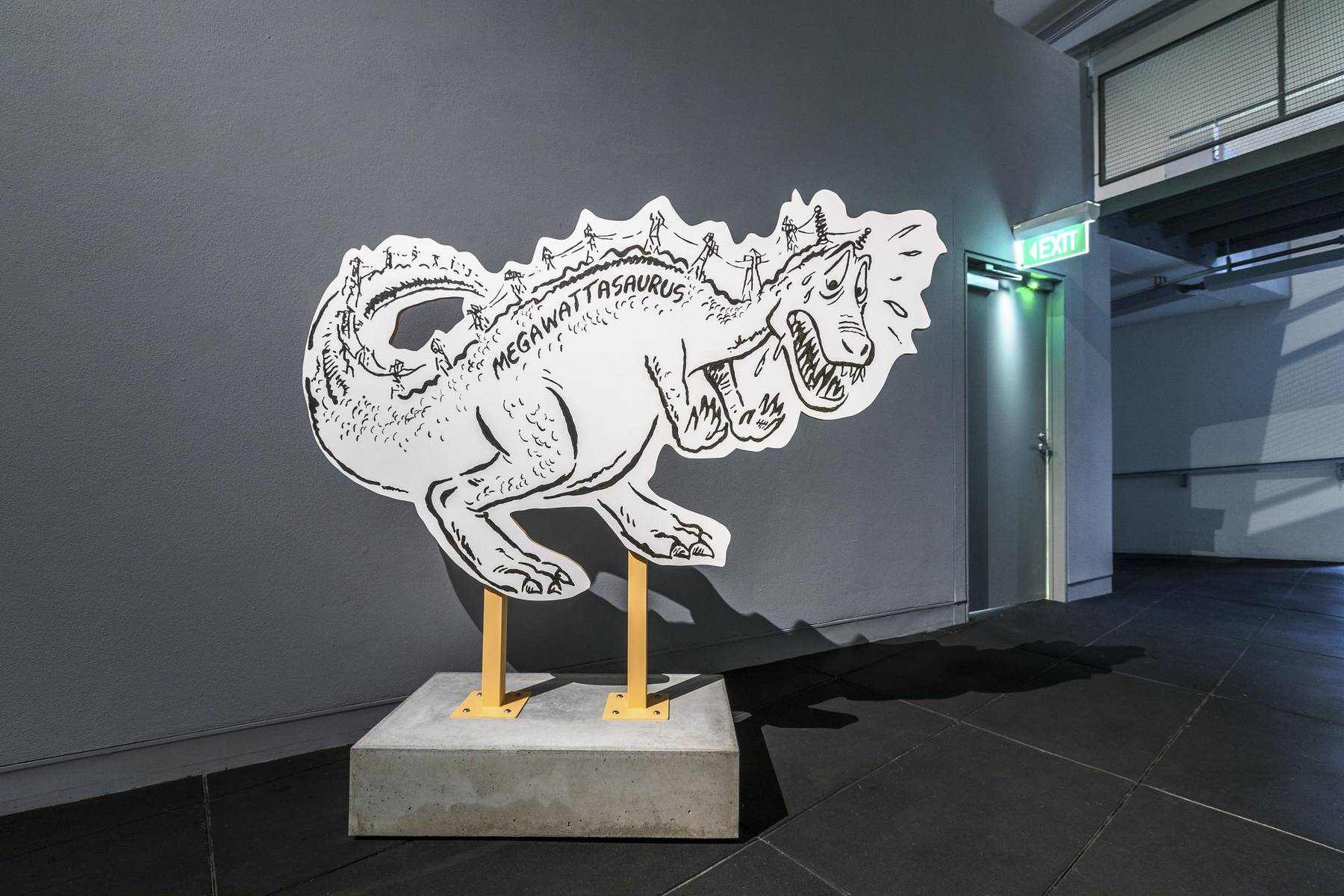
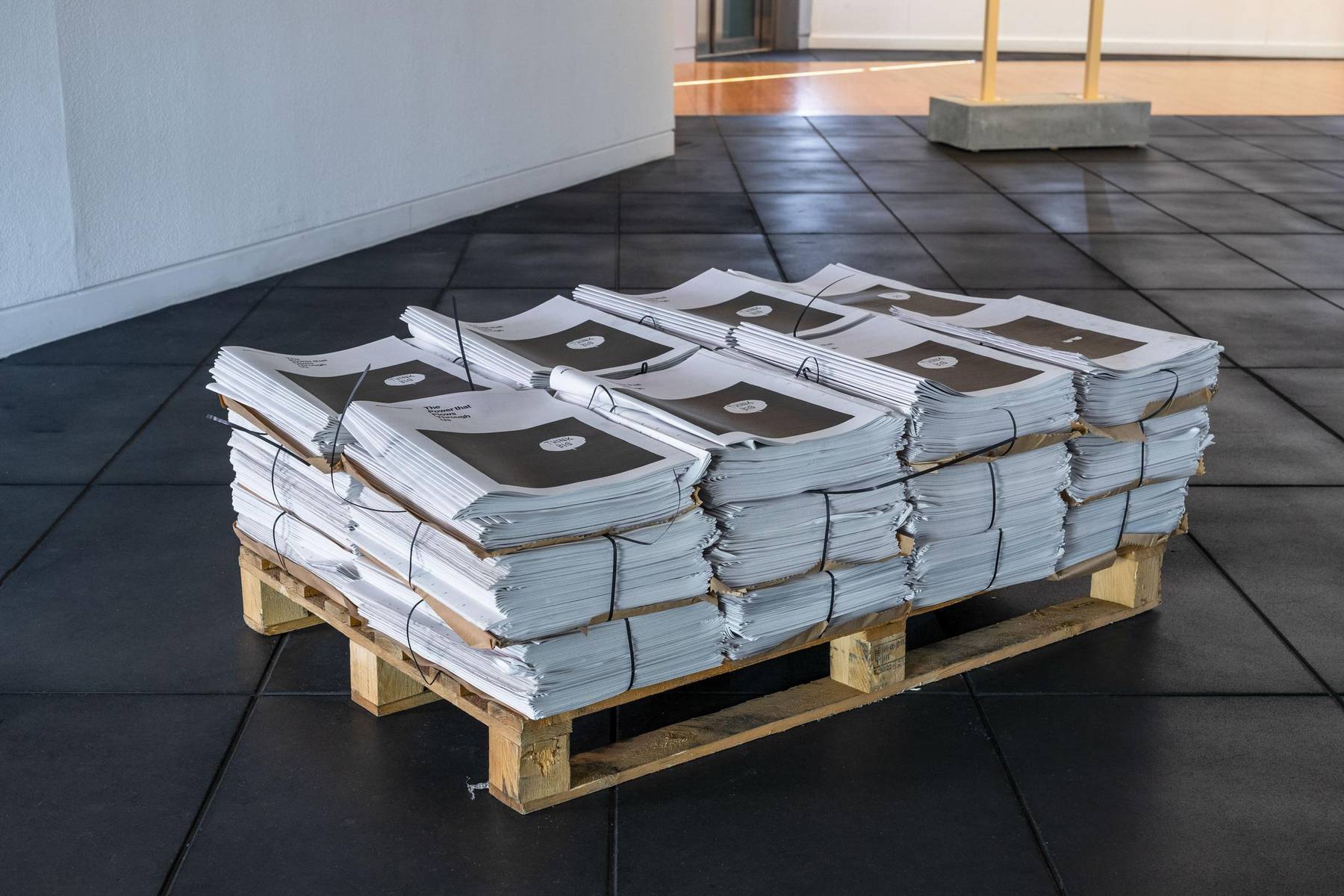
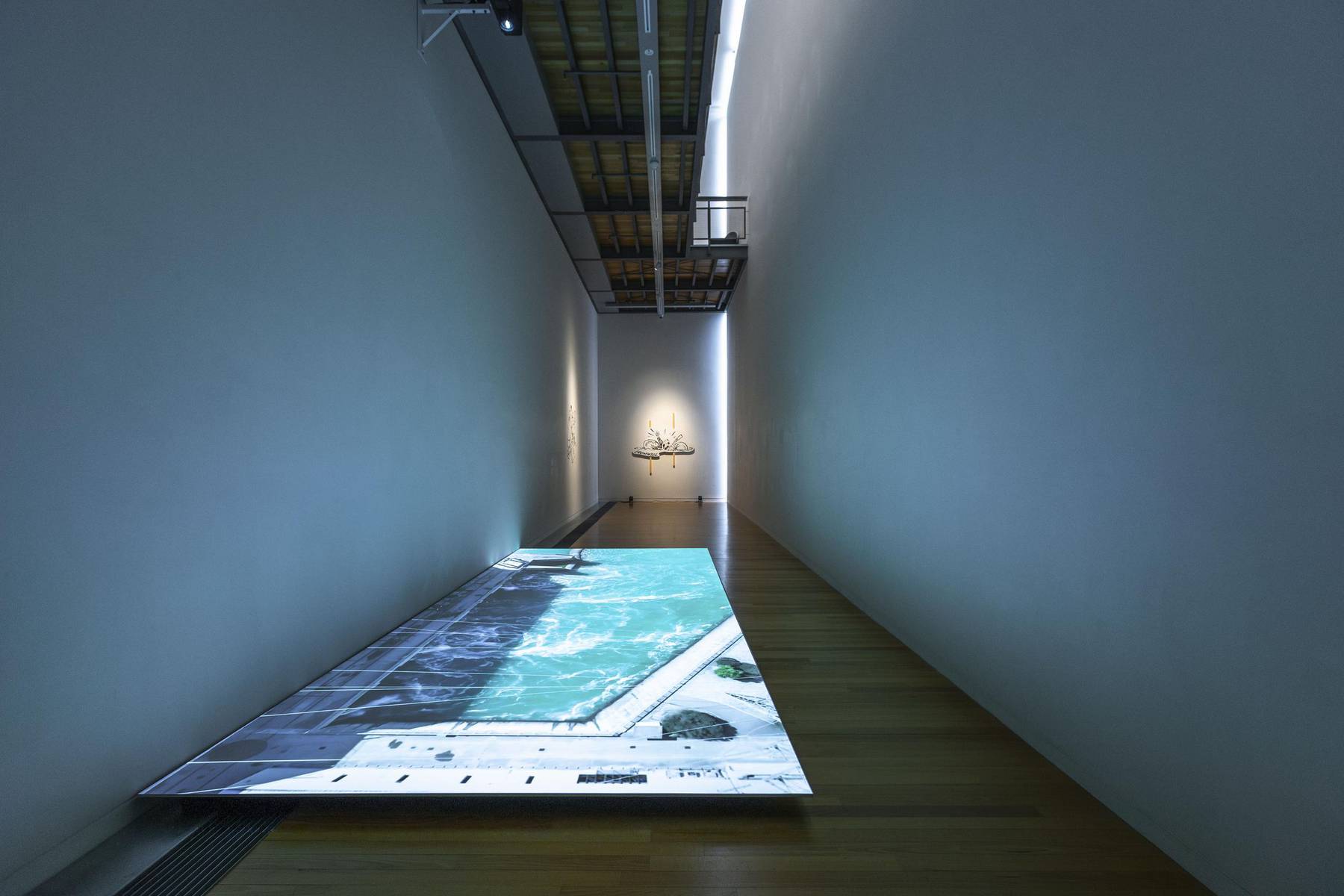
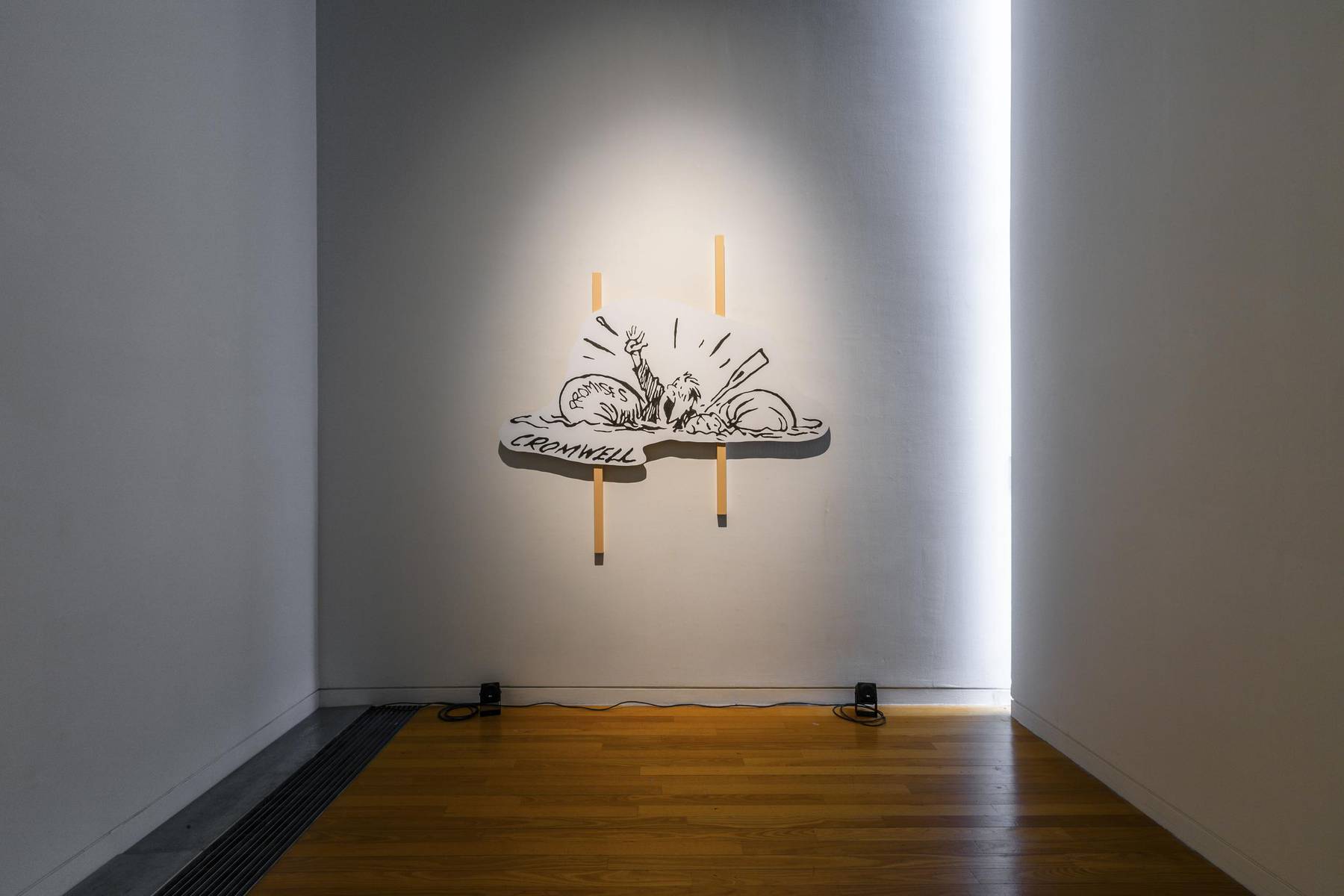
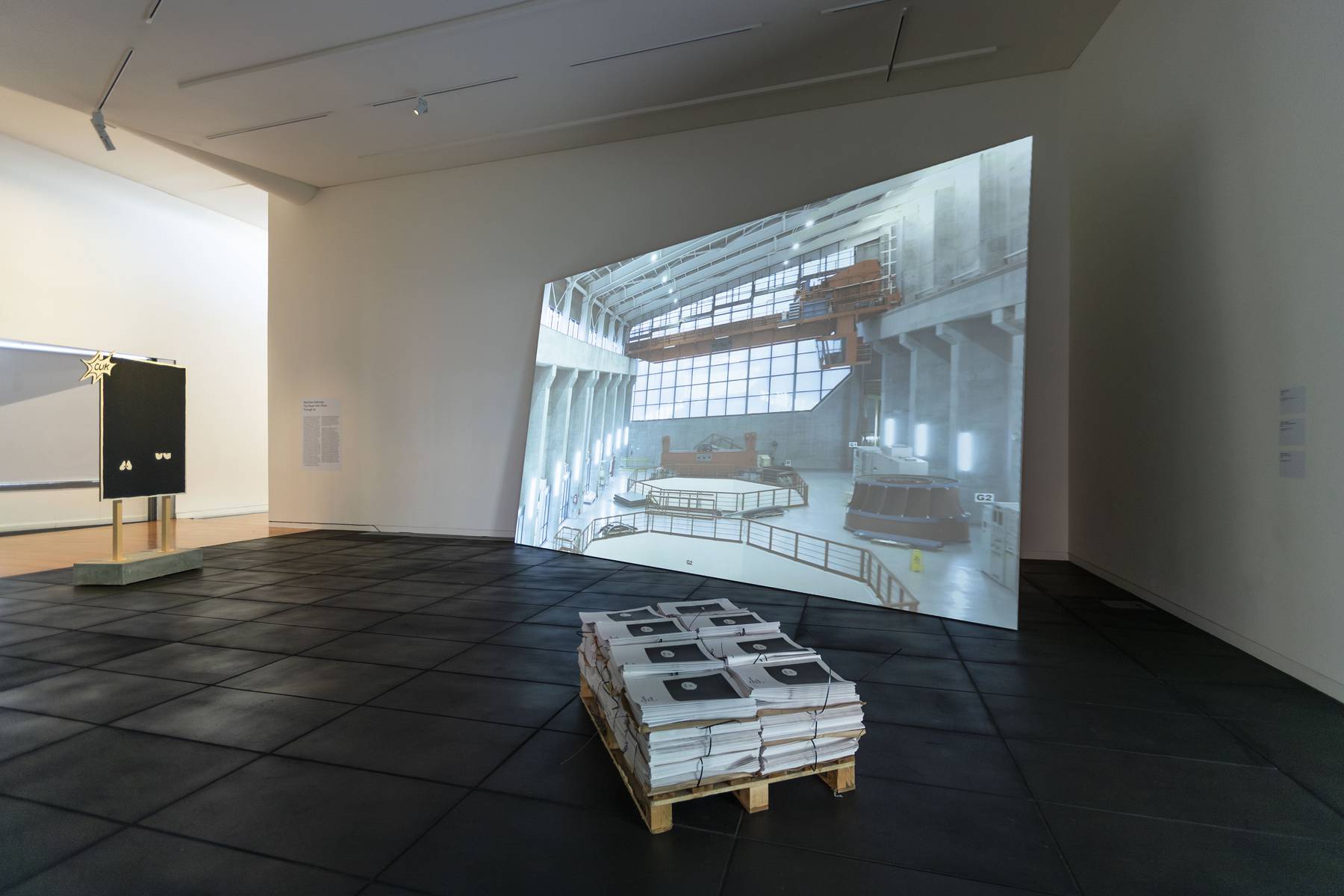
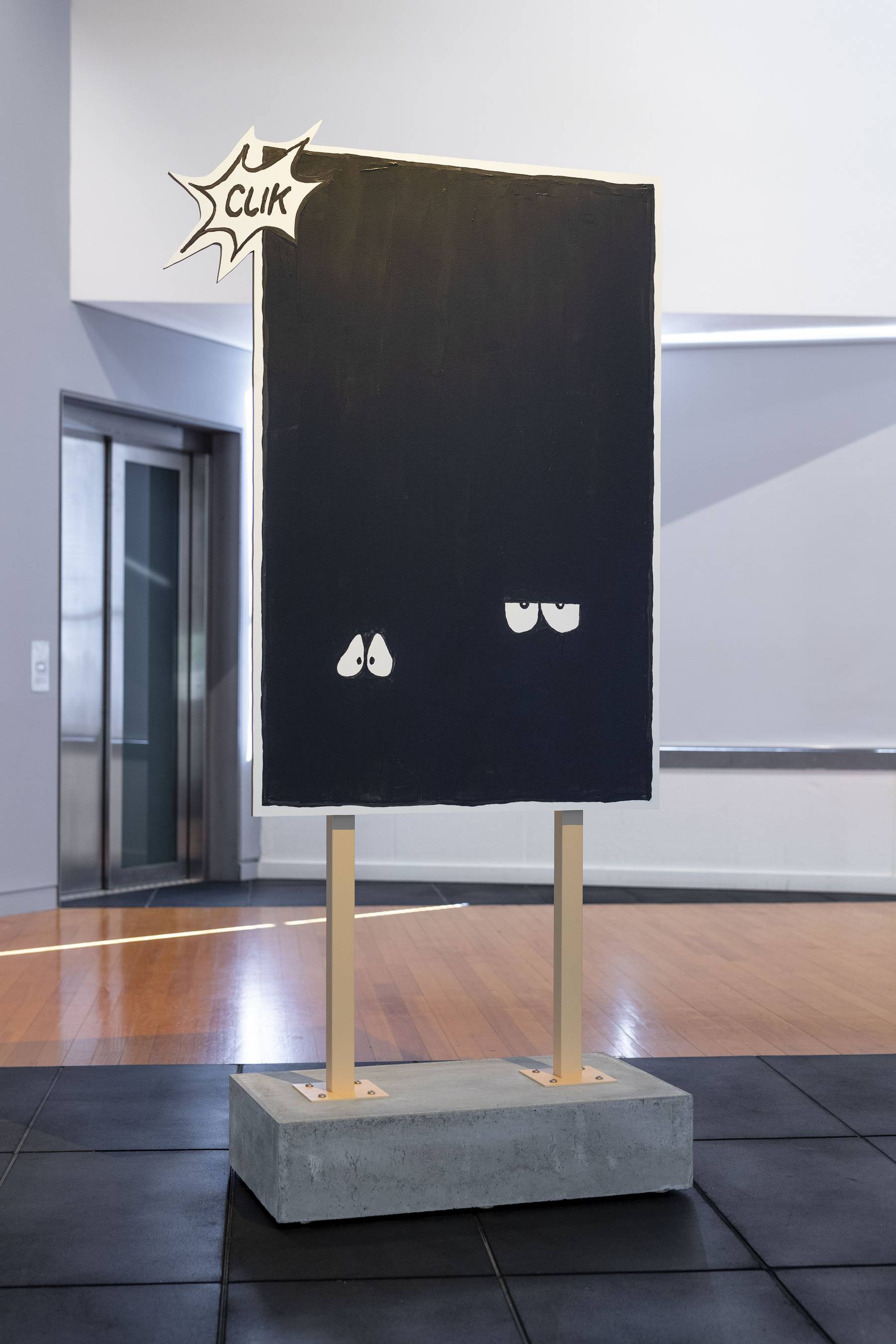
The Power that Flows Through Us explores the construction and political context around the Clyde Dam, the third-largest hydroelectric plant in Aotearoa, a legacy of Robert Muldoon’s ‘Think Big’ initiative. Playing off the architecture of the gallery to help us reflect on the monumental physicality of the dam, Galloway uses poetry as sonic interventions, large-scale projections of drone footage and archival political cartoons blown up into sculptural form, to locate us within the narratives and perspectives swirling around the Clyde Dam since its inception. The exhibition invites us to consider not only the physical generation of electrical power but also the distribution and implementation of political power.